
Professional-strength whitening with 35% carbamide peroxide, during or after your orthodontic treatment.
A brighter smile can be part of your orthodontic journey, whether you’re currently in treatment or have already finished.
The ABM Whitening Pen contains 35% carbamide peroxide, an established tooth-whitening ingredient that helps lighten discoloration in natural teeth.
Below, you’ll find information about how it works, how to use it, and what to expect—including answers to common questions about whitening during orthodontic treatment.

Carbamide peroxide gradually breaks down into hydrogen peroxide and urea. The hydrogen peroxide penetrates tooth enamel and helps break down the compounds responsible for discoloration.
Unlike whitening toothpastes that primarily remove surface stains, peroxide-based whitening can also lighten discoloration within natural teeth.
No. Both are effective whitening ingredients, but the concentrations are not equivalent.
Carbamide peroxide breaks down to release hydrogen peroxide. 35% carbamide peroxide provides approximately 12% hydrogen peroxide equivalent.
This does not mean the two formulations will produce identical results. The formulation, application method, and contact time all influence whitening effectiveness.
Whitening effectiveness and sensitivity depend on the concentration, formulation, contact time, and individual response. Carbamide peroxide is not automatically gentler than hydrogen peroxide.
Carbamide peroxide releases hydrogen peroxide as it breaks down, allowing whitening activity to occur over the application period.
Carbamide peroxide has been used in professionally supervised dental whitening for decades.
Our whitening pen allows the gel to be applied directly to the tooth surfaces without requiring a custom whitening tray.
The 35% concentration provides a higher-strength whitening option intended for use according to professional guidance.
Recommended application time: 30 minutes, once daily.
If you have braces, clear-aligner attachments, or dental restorations, ask us whether whitening is appropriate for you before beginning.

Some patients may begin noticing a difference within approximately one week of daily use, with additional whitening developing over the following two to three weeks.
Your results will depend on several factors, including your starting tooth shade, type of discoloration, application technique, and individual response.
A 2026 randomized clinical trial evaluated 35% carbamide peroxide applied for 30 minutes daily over three weeks. The study found significant whitening, with relatively rapid initial color improvement during the first two weeks.
However, the study used custom whitening trays rather than brush-on pens. These findings provide a useful reference but do not establish a guaranteed timeline for the ABM Whitening Pen.
A specific tooth shade, whitening result, or treatment duration cannot be guaranteed.
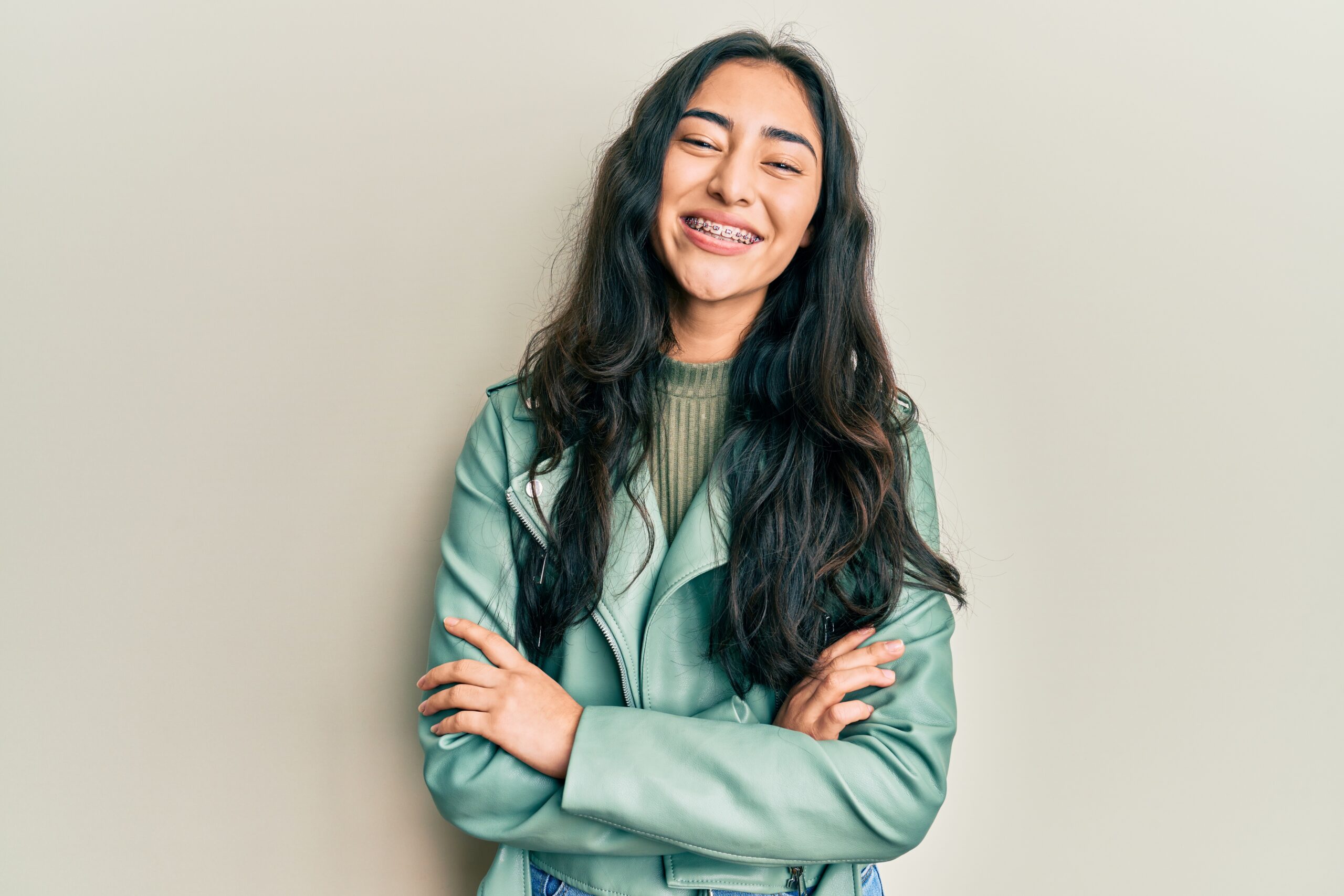
Potentially, yes. Research suggests that brackets and clear-aligner attachments do not completely prevent peroxide-based whitening.
Whitening agents can produce color changes in enamel beneath bonded orthodontic appliances, although the degree of whitening may differ from exposed enamel.
A 2023 laboratory study published in the American Journal of Orthodontics and Dentofacial Orthopedics evaluated whitening with 35% hydrogen peroxide on enamel covered by composite attachments. The researchers found that whitening occurred beneath the attachments, demonstrating that bonded composite attachments did not completely block the bleaching effect.
A 2023 randomized clinical trial published in BMC Oral Health evaluated whitening in patients wearing fixed orthodontic appliances. The study found that teeth could be whitened while brackets were present, although overall whitening effectiveness was lower than in patients without brackets.

This is a reasonable concern, but the available research is reassuring in one important respect: uneven whitening is a possibility, not an established frequent cosmetic complication.
Laboratory studies have measured color differences between enamel beneath brackets and enamel surrounding them. Some differences may be perceptible under controlled viewing conditions. However, researchers have not established how frequently patients experience visibly noticeable, bracket-shaped color differences after their appliances are removed.
In other words, a measurable difference does not necessarily mean you’ll notice a patch or outline on your teeth. The final result depends on the whitening agent, application technique, tooth characteristics, and the orthodontic appliances involved.
Most of the clinical research specifically evaluating whitening during orthodontic treatment has involved hydrogen peroxide-based bleaching, including professionally applied, high-concentration formulations. Some laboratory research has also investigated carbamide peroxide beneath brackets.
These findings are relevant to our whitening pen because carbamide peroxide releases hydrogen peroxide as its active whitening ingredient. However, the studies do not directly establish the whitening results or color uniformity achievable with our specific 35% carbamide peroxide brush-on pen.
Please ask the ABM Team before beginning whitening during active orthodontic treatment.
Yes. You don’t need to give up coffee or tea entirely to whiten your teeth.
Coffee and tea contain pigments that can contribute to surface staining over time. However, research does not support the routine requirement to avoid these beverages for 24–48 hours after whitening.
Avoid coffee, tea, food, and other beverages while the whitening gel is on your teeth. Complete the application and remove the gel as instructed before eating or drinking.
Once your whitening session is complete and the gel has been removed, you can generally resume your usual beverages unless your clinician recommends otherwise. You do not routinely need to wait 24–48 hours before drinking coffee or tea.
Frequent exposure to coffee, tea, and other dark-colored beverages may contribute to surface staining. A few practical steps can help maintain your results: Consider reducing how frequently you drink dark-colored beverages. Rinse your mouth with water afterward. Maintain regular brushing and flossing.
A 2025 systematic review and network meta-analysis found that consuming pigmented beverages—including coffee and tea—did not significantly reduce whitening effectiveness compared with following a restrictive white diet. This suggests that strict dietary restrictions are generally unnecessary during whitening.
These findings are based on clinical bleaching studies, not specifically on our brush-on whitening pen.
Yes. Temporary tooth sensitivity and gum irritation are among the most common side effects of peroxide-based whitening.
Although carbamide peroxide releases hydrogen peroxide gradually, this does not guarantee less sensitivity. Sensitivity depends on several factors, including peroxide concentration, application duration, individual tooth characteristics, and the condition of your teeth and gums.
Younger patients and those who are pregnant or breastfeeding should also discuss whitening with a dental professional before using the product.
If you experience significant sensitivity, burning, or irritation, stop using the whitening pen and contact our office.
Peroxide-based whitening lightens natural tooth structure but does not predictably change the color of composite fillings, veneers, crowns, or orthodontic attachments.
As natural teeth become lighter, existing restorations may appear darker by comparison.
If you have visible dental restorations or attachments, we can help you understand what to expect before starting.
Whether you’re wearing braces, using clear aligners, or maintaining your smile after treatment, we’re happy to help you understand your whitening options.
ABM Orthodontics
1180 Ponce de Leon Blvd, Suite 501
Clearwater, FL 33756
Call or text: 727-605-2266
Schedule your appointment today and experience personalized dental care that puts your comfort first. Healthy teeth. Confident you.

We believe patients should have access to the evidence behind the treatments and products we discuss. The following studies provide additional information about whitening during orthodontic treatment, carbamide peroxide, and common whitening recommendations.
This page provides general educational information and does not replace individualized dental advice. Whitening results vary, and the suitability of treatment depends on your oral health, dental restorations, and orthodontic appliances. Please follow the product instructions and any recommendations provided by your dental professional.
Our convenient Clearwater location at 1180 Ponce de Leon Blvd makes quality orthodontic care accessible to families throughout Pinellas County. We’re proud to serve patients from Clearwater, Largo, Belleair, Safety Harbor, Dunedin, Palm Harbor, St. Petersburg, Seminole and the surrounding communities. Our modern office features the latest orthodontic technology in a welcoming, comfortable environment designed with your family in mind. Whether you’re coming from nearby or across the bay, you’ll find ample parking and easy access to our practice. We offer flexible appointment times, including select Saturdays, to fit your busy schedule. Schedule your complimentary consultation today and discover the ABM Orthodontics difference.